
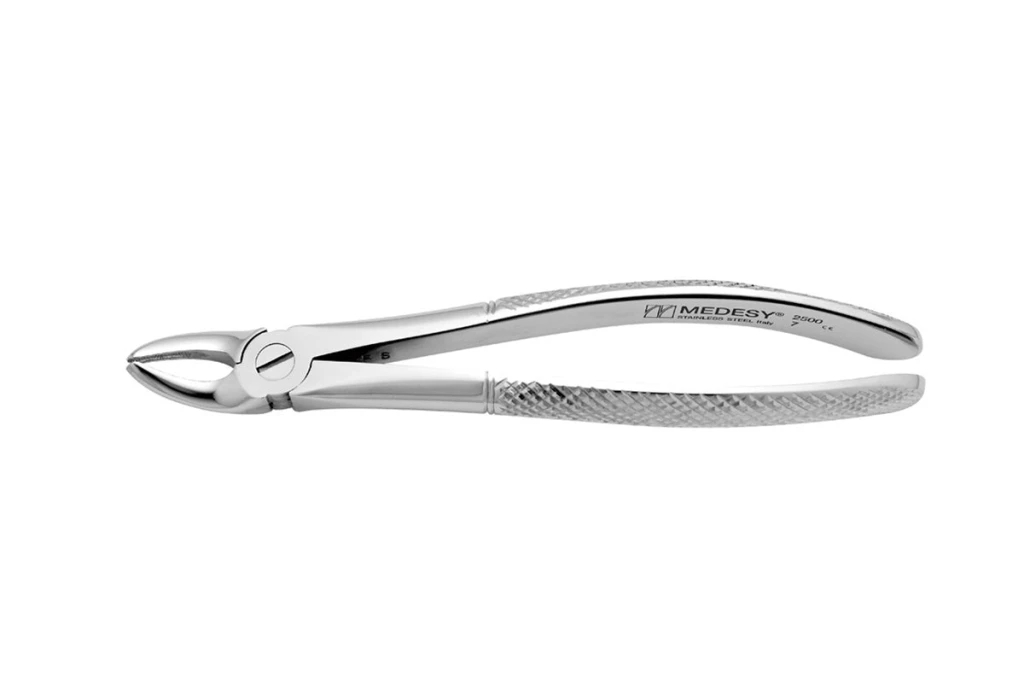


Forbici per premolari mascellari
DaWeesgaard Dental
Codice 25007
Non disponibile
Al momento il prodotto che ti interessa non è disponibile. Vai al catalogo per trovare una vasta gamma di prodotti simili
Non disponibile
Al momento il prodotto che ti interessa non è disponibile. Vai al catalogo per trovare una vasta gamma di prodotti simili
Descrizione
Forbici per premolari mascellari
Maxillary premolar forceps are specialized dental instruments designed for the extraction of maxillary premolar teeth. These forceps possess unique characteristics that enhance their functionality and effectiveness during dental procedures. Below are some common characteristics of maxillary premolar forceps:
Design and Structure
The design of maxillary premolar forceps is tailored to accommodate the specific anatomy of maxillary premolars. Key features include:
- Curved Beaks: The beaks of these forceps are typically curved, allowing for better access and grip on the tooth.
- Thin Profile: A slender profile helps in maneuvering the forceps in tight spaces within the oral cavity.
- Angled Handles: The handles are often angled to provide optimal leverage and control during extraction.
Material and Durability
Maxillary premolar forceps are usually made from high-quality stainless steel, which offers several advantages:
- Corrosion Resistance: Stainless steel is resistant to rust and corrosion, ensuring longevity and maintaining hygiene.
- Strength: The material provides the necessary strength to withstand the forces applied during tooth extraction.
- Ease of Sterilization: Stainless steel can be easily sterilized, making it suitable for repeated use in clinical settings.
Functionality
The primary function of maxillary premolar forceps is to facilitate the extraction of maxillary premolars. Their functionality is enhanced by:
- Optimal Grip: The design of the beaks allows for a secure grip on the tooth, minimizing the risk of slippage.
- Controlled Force Application: The angled handles enable the dentist to apply controlled force, reducing trauma to surrounding tissues.
- Versatility: While primarily used for premolars, these forceps can also be effective for certain other maxillary teeth.
Ergonomic Features
Ergonomics play a crucial role in the design of maxillary premolar forceps, ensuring comfort for the dentist during use:
- Comfortable Handles: The handles are often designed to provide a comfortable grip, reducing hand fatigue during prolonged procedures.
- Lightweight Construction: A lightweight design allows for easier maneuverability and less strain on the dentist’s wrist.
Identification and Variations
Maxillary premolar forceps come in various designs and sizes, allowing dentists to choose the most suitable option for their practice:
- Different Sizes: Available in multiple sizes to accommodate different tooth sizes and patient anatomies.
- Specific Models: Some models may have additional features, such as locking mechanisms or specialized beak shapes for enhanced performance.
Maxillary premolar forceps are specialized dental instruments designed for the extraction of maxillary premolar teeth. Their unique design and functionality make them essential tools in various dental procedures. Below are the key indications for the use of maxillary premolar forceps in dentistry.
Indications for Use
1. Extraction of Maxillary Premolars
The primary indication for using maxillary premolar forceps is the extraction of maxillary premolar teeth. These forceps are specifically shaped to grasp the crown of the premolar securely, allowing for effective removal with minimal trauma to surrounding tissues.
2. Root Canal Treatment Failures
In cases where root canal treatments have failed, maxillary premolar forceps are indicated for the extraction of the affected teeth. This is particularly relevant when there is persistent infection or pain that cannot be resolved through endodontic therapy.
3. Orthodontic Treatment Preparations
Before initiating orthodontic treatment, it may be necessary to extract maxillary premolars to create space for proper alignment of the remaining teeth. Maxillary premolar forceps are ideal for this purpose due to their design, which allows for precise extraction.
4. Periodontal Disease
Severe periodontal disease can lead to tooth mobility and loss of supporting structures. In such cases, the use of maxillary premolar forceps is indicated for the extraction of compromised premolars to prevent further complications.
5. Impacted Teeth
When maxillary premolars are impacted or have not erupted properly, extraction may be necessary. Maxillary premolar forceps facilitate the removal of these teeth, especially when they are positioned at an angle or are partially erupted.
6. Trauma or Fractured Teeth
In instances of dental trauma where maxillary premolars are fractured beyond repair, the use of maxillary premolar forceps is indicated for extraction. This ensures that the damaged tooth is removed safely and efficiently.
7. Pre-Prosthetic Surgery
Prior to the placement of dental implants or prosthetics, it may be necessary to extract maxillary premolars. The use of maxillary premolar forceps allows for the careful removal of teeth to prepare the site for future dental work.
8. Patient Comfort and Efficiency
Maxillary premolar forceps are designed to provide a comfortable grip for the dentist, allowing for efficient extraction with minimal discomfort to the patient. Their ergonomic design helps in reducing hand fatigue during procedures.
Conclusion
In summary, maxillary premolar forceps are indispensable tools in the dental field, indicated for a variety of situations involving the extraction of maxillary premolars. Their specialized design enhances the efficiency and safety of dental extractions, contributing to better patient outcomes.
Maxillary premolar forceps are essential tools in the dental practice, specifically designed for the extraction of maxillary premolars. Their unique design and functionality offer several benefits that enhance the efficiency and effectiveness of dental procedures.
Enhanced Precision
One of the primary advantages of using maxillary premolar forceps is the enhanced precision they provide during extractions. The shape and curvature of these forceps allow for better access to the maxillary arch, ensuring that the forceps can grip the tooth securely without damaging adjacent structures.
Improved Ergonomics
Maxillary premolar forceps are designed with ergonomics in mind. Their handles are crafted to fit comfortably in the dentist's hand, reducing fatigue during prolonged procedures. This ergonomic design allows for better control and maneuverability, which is crucial when performing delicate extractions.
Minimized Trauma
Using the appropriate forceps for maxillary premolars helps minimize trauma to the surrounding tissues. The specific design of these forceps allows for a more gentle extraction process, reducing the risk of complications such as bone fractures or soft tissue damage.
Time Efficiency
Maxillary premolar forceps can significantly reduce the time required for tooth extractions. Their design allows for quick and efficient removal of the tooth, which can lead to shorter appointment times and increased patient satisfaction.
Versatility in Use
These forceps are not only effective for extracting maxillary premolars but can also be used in various situations where access to the maxillary arch is required. This versatility makes them a valuable addition to any dental toolkit.
Durability and Reliability
Maxillary premolar forceps are typically made from high-quality stainless steel, ensuring durability and longevity. This reliability means that dental practitioners can depend on these tools for consistent performance over time, making them a worthwhile investment.
Enhanced Patient Comfort
When using maxillary premolar forceps, the extraction process can be less traumatic for patients. The design allows for smoother extractions, which can lead to less postoperative discomfort and quicker recovery times.
Facilitates Better Visualization
The design of maxillary premolar forceps allows for better visualization of the extraction site. This improved visibility helps dentists to perform the procedure with greater accuracy, ensuring that all aspects of the extraction are handled properly.
Training and Skill Development
For dental students and new practitioners, using specialized tools like maxillary premolar forceps can aid in developing their skills. The specific design helps them understand the mechanics of tooth extraction better, fostering confidence in their abilities.
- Enhanced Precision for secure grip and access.
- Improved Ergonomics for reduced hand fatigue.
- Minimized Trauma to surrounding tissues.
- Time Efficiency for quicker procedures.
- Versatility for various extraction scenarios.
- Durability for long-lasting use.
- Enhanced Patient Comfort for smoother extractions.
- Better Visualization of the extraction site.
- Training Aid for skill development.
Non disponibile
Al momento il prodotto che ti interessa non è disponibile. Vai al catalogo per trovare una vasta gamma di prodotti simili